Hello, investors! If the past few weeks felt like a bumpy, crowded ride on a local train with oil prices zooming and our portfolios bleeding red, last week finally gave Dalal Street a chance to breathe.
Let’s break down exactly what happened in the global markets over the past week in plain, simple English—no complicated financial jargon—and discuss what to look out for in the coming days.
The Big Story: A Fragile Peace Brings a Massive Relief Rally
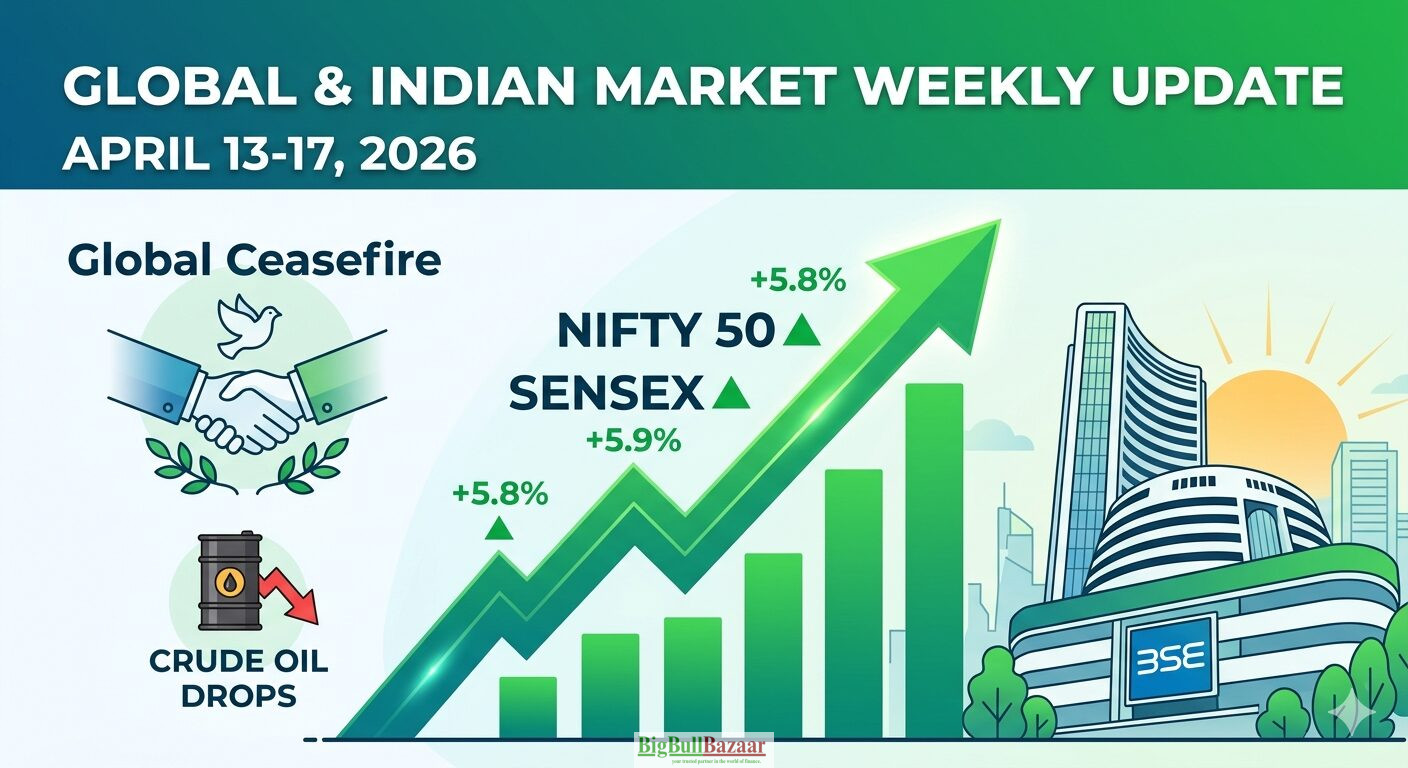
The biggest trigger for the stock market jumping globally last week was the announcement of a two-week ceasefire between the United States and Iran. Think of it this way: investors were basically holding their breath because a war in the Middle East means expensive crude oil and disrupted shipping lines. When the temporary truce was announced, the entire market exhaled at once.
Because of this, crude oil prices saw their steepest weekly fall since 2020, crashing from a scary $115 per barrel to around $96. For heavy oil-importing countries like ours, this was an absolute game-changer.
Market Scorecard: How the Indices Performed
Here is the quick scorecard for the week ending April 10, 2026:
- India (The Showstopper): What a massive rebound! The Sensex jumped 5.8% and the Nifty gained 5.9%. Let that sink in—this was the best week for Indian equities in five years! Bank Nifty led the charge, as lower oil prices directly help keep Indian inflation in check.
- United States: Wall Street had its best week since November. The tech-heavy Nasdaq zoomed nearly 4.7%, while the S&P 500 added 3.6%, mostly driven by tech giants like Nvidia and Intel.
- Asia: Asian markets were on fire. South Korea’s KOSPI was the superstar, soaring almost 7%, while Japan’s Nikkei added nearly 6%.
- Europe: Gains here were steady but a bit more cautious, with markets in Germany and France rising around 3%.
Why Did the Market Bounce Back? (3 Simple Reasons)
1. The Crude Oil Cooling Effect
When oil gets cheaper, manufacturing and transport costs go down. That simply means companies can save their margins, and consumers have more disposable income. This brings a huge sigh of relief to sectors closely tied to crude, like aviation (airlines), paint companies, and FMCG.
2. US Inflation Isn’t Out of Control (Yet)
Friday’s US inflation data showed the headline number jumping to 3.3%. Sounds scary, right? But looking closely, it was almost entirely due to a spike in gasoline prices from the prior week. The “core” inflation (which removes volatile food and energy costs) actually came in lower than the street expected. This gave the US Federal Reserve a reason not to aggressively hike interest rates right away.
3. Massive Short Covering
Before this rally, a lot of traders were sitting on “short” positions, betting that the market would keep falling. When the positive ceasefire news broke, the bears got trapped! They had to rush in to buy stocks back to cover their positions, pushing prices even higher. This short-covering was especially visible in the Indian banking sector.
What to Watch Next Week (April 13-17)
Next week is going to be crucial. It could either be a steady climb or turn into a rollercoaster all over again. Keep your eyes glued to these three triggers:
1. The Weekend Talks in Islamabad (The Decider)
The US and Iran are sitting down this weekend to negotiate extending the peace deal. This is a binary, make-or-break event for the market.
- If talks succeed: Expect the markets to continue their upward momentum gently.
- If talks fail: Expect crude oil to shoot right back past $105 and global stocks to drop 3-5% in the blink of an eye.
2. US Bank Earnings Season Kicks Off
The big daddies of American banking—JPMorgan, Goldman Sachs, Bank of America—will start announcing their Q1 results from Monday. More than the numbers, listen to the management commentary. Are people defaulting on credit cards? Are businesses taking loans? It’s the ultimate health check for the global economy.
3. Key Macro Economic Data
- China GDP (Tuesday): We’ll get a clear picture of how the world’s second-largest economy is surviving amid global tensions.
- US Retail Sales (Wednesday): This will show us if the American consumer is still spending despite sticky inflation and gloomy headlines.
The Final Takeaway: Should You FOMO Buy?
The market is currently in a very tricky spot. Yes, the peace talks are a major positive, but let’s be honest—the broader US economy is still slowing down (GDP growth is near 1%), and global inflation hasn’t completely vanished.
Bottom line: Last week was a classic relief rally. It felt amazing to see green on our screens, but remember that it is built on a temporary truce. Until we have clarity on a permanent deal, the market will likely consolidate and move sideways.
Now is probably not the time to make blind, aggressive bets with your capital. Staying patient and watching the outcome of this weekend’s geopolitical talks is the smartest strategy for the retail investor right now.
Markets always reward discipline, not impulse. Have a great trading week ahead!
Disclaimer: This blog is purely for educational and informational purposes and does not constitute financial advice. Please do your own research or consult your SEBI-registered investment advisor before deploying your hard-earned money.