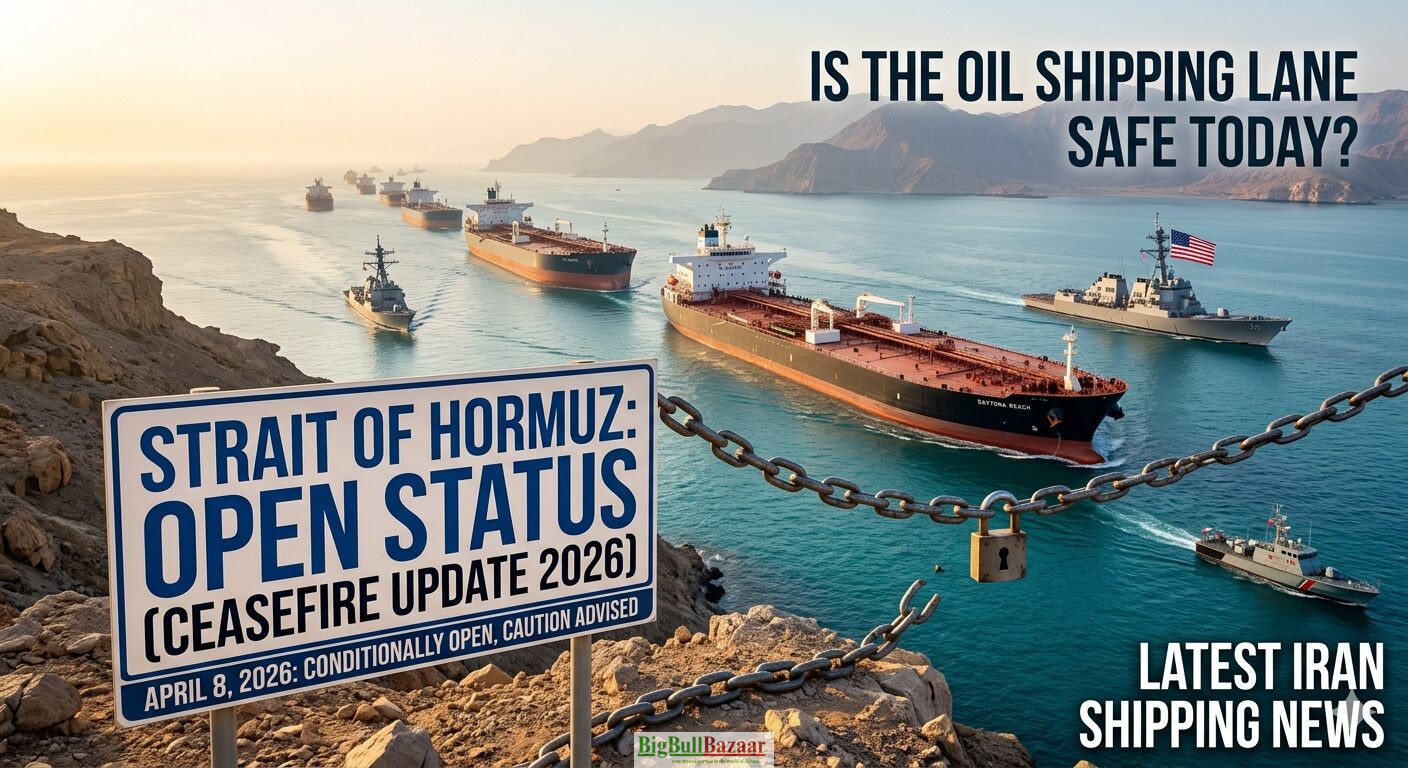
Strait of Hormuz Open Status 2026: Is the Oil Shipping Lane Safe Today?
The world’s most critical energy artery is finally flowing again—but the real question is, for how long? After weeks of escalating tension that threatened to cripple global energy markets, the Strait of Hormuz open status has seen a dramatic shift in the last 24 hours.
As of April 8, 2026, the strait is conditionally open. It’s a temporary—and incredibly fragile—reprieve in a maritime crisis that left nearly 1,000 vessels stranded at sea. Whether you are a commodities trader, a logistics coordinator, or just someone feeling the pinch of the global economy, here is the straightforward, deep-dive analysis you need on the latest Hormuz ceasefire 2026 news.
Why Is the Strait of Hormuz Open Now? (The Ceasefire Explained)
The reopening isn’t a permanent fix; it is the result of a high-stakes, 11th-hour diplomatic scramble right before a major military deadline. Here is how it happened:
- The 14-Day Window: Late on April 7, 2026, the U.S. and Iran agreed to a strict two-week ceasefire. For the U.S. administration, the primary, non-negotiable condition was clear: the complete, immediate, and safe opening of the Strait of Hormuz.
- The Peacemakers: Washington and Tehran didn’t just shake hands directly. This de-escalation heavily relied on mediation from Pakistan, with Prime Minister Shehbaz Sharif and Field Marshal Asim Munir stepping in to broker the deal at the last possible moment.
- The Catch: While the strait is technically “open,” Iranian officials made it clear that passage requires “coordination with Iran’s armed forces.” Add in existing technical hurdles, and it is obvious that normal, pre-crisis traffic won’t be bouncing back overnight.
Iran Shipping News: The First Ships Move
During the peak of the blockade, commercial crossings plummeted by over 95%. Today, we are finally seeing movement on the water, but the logistics of clearing the traffic jam are staggering.
- The First Crossings: Cautious optimism is returning as the first commercial ships braved the route. The Greek-owned bulk carrier NJ Earth and the Liberian-flagged Daytona Beach successfully transited the strait on the morning of April 8.
- The Massive Backlog: Do not expect the congestion to vanish quickly. Over 800 vessels are still trapped in the Persian Gulf region. That includes a massive bottleneck of 426 oil tankers, 34 LPG carriers, and 19 LNG carriers. Realistically, clearing this backlog will take much longer than the current 14-day ceasefire allows.
Crude Oil Price Impact & Market Reactions
The ceasefire provided immediate relief to anxious energy markets, but the underlying tension is still very much alive.
- A Temporary Price Dip: Crude oil futures dropped slightly right after the ceasefire was announced, wiping out the immediate crisis premium. However, analysts are quick to point out that the market is still operating under a heavy “fear premium” given the short two-week deadline.
- Insurers Aren’t Convinced: Major shipping insurers and Protection and Indemnity (P&I) clubs aren’t dropping their guard. They are still slapping heavy war risk premiums on vessels passing through the area, waiting for solid proof that this “safe passage” actually works without interference from the IRGC Navy.
What Happens Next? The 14-Day Watchlist
The Strait of Hormuz open status is written in pencil, not pen. Whether this crucial waterway stays open past mid-April depends entirely on three things:
- The Pakistan Peace Talks: The ceasefire agreement hinges on broader negotiations kicking off soon in Pakistan. These talks are expected to cover heavy-hitting topics like sanctions relief and Iran’s nuclear program. If these discussions collapse, expect the strait to shut down again instantly.
- IRGC Checkpoints: The Islamic Revolutionary Guard Corps (IRGC) hasn’t minced words, warning that the strait “will never return to its previous status” for U.S. and Israeli-linked ships. The maritime world is on high alert for any “technical delays” or harassment of Western-flagged vessels.
- Global Oil Supply Chain Shifts: Even if peace holds, the damage is done. This brief closure has put global energy security front and center. Expect to see aggressive, long-term moves toward supply chain diversification as countries refuse to be held hostage by a single maritime chokepoint.
The Bottom Line for April 8, 2026
Yes, the Strait of Hormuz is open today. Ships are moving, and crude oil is flowing. But make no mistake: this is a diplomatic band-aid on a very deep geopolitical wound. With the clock ticking on a 14-day countdown, stakeholders need to keep a close eye on marine traffic data and the daily Persian Gulf news cycle. The global economy is breathing, but it is definitely not out of the woods yet.