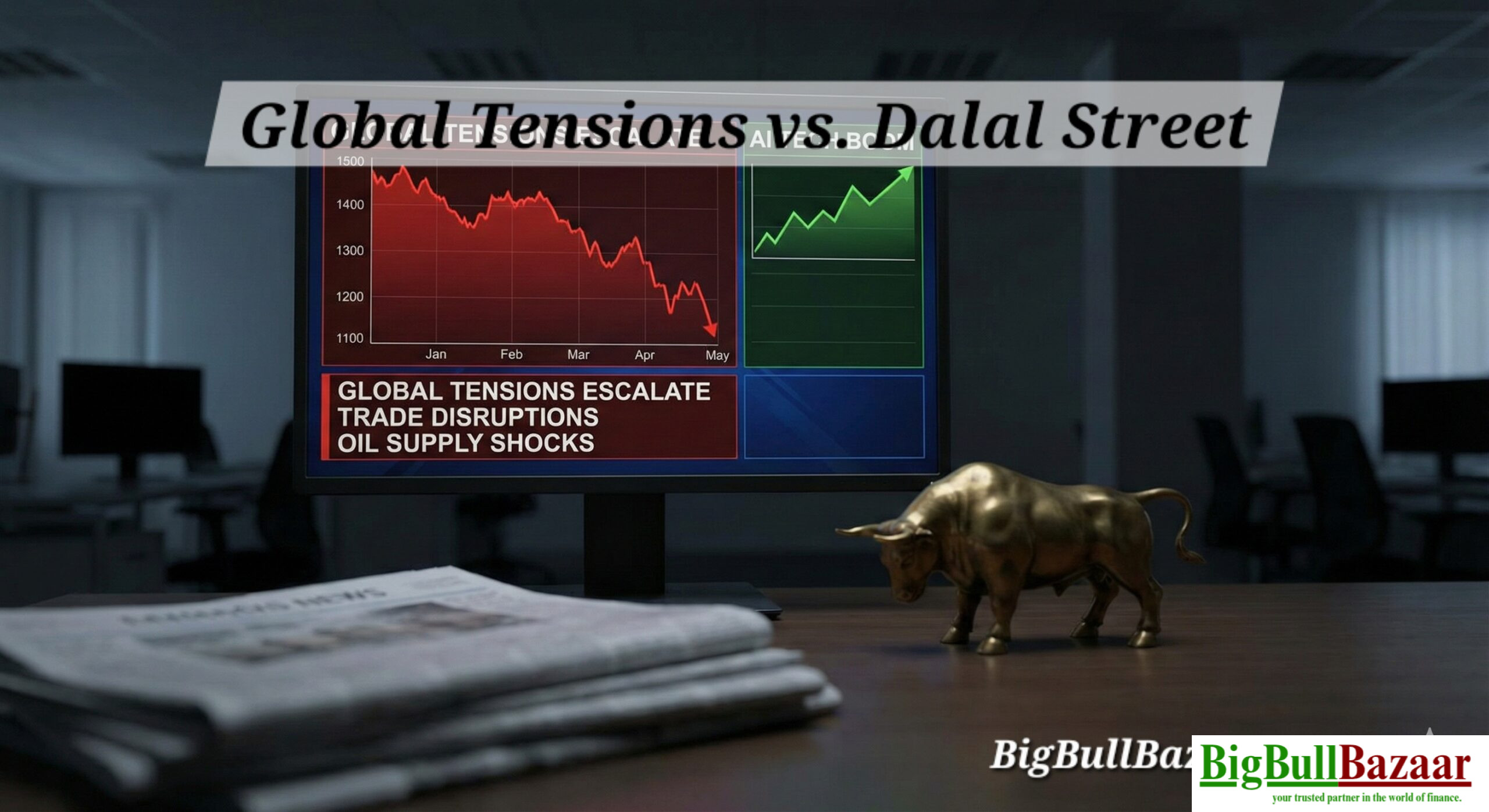
The year 2026 has started on a shaky note for global peace, but a surprisingly stubborn one for financial markets. From Washington’s fresh moves in Venezuela to the heated rhetoric over Greenland, the geopolitical temperature is rising. For the Indian investor sitting in Mumbai or Bengaluru, the question isn’t just about world politics—it’s about “Kya market girega?” (Will the market fall?).
While global tensions are creating ripples in trade and currency, the story on Dalal Street is one of a complex tug-of-war. We are seeing a clash between the fear of conflict and the greed for growth driven by the massive AI boom.
Here is a breakdown of how these global headwinds are hitting our financial shores and what it means for your SIPs and stocks.
The 4 Channels: How Global Chaos Hits Your Wallet
When global leaders clash, the shockwaves travel to India through four specific “pines” (channels).
| Mechanism | How It Works | Impact on Indian Markets |
|---|---|---|
| Trade Wars & Tariffs | “Tit-for-tat” tariffs increase costs for exporters. If the West sneezes, supply chains catch a cold. | Sector Pain: IT and Pharma exporters face margin pressure. Auto ancillaries exporting to Europe may see sell-offs. |
| Monetary Policy Pressure | Political pressure on central banks (like the Fed) to cut rates risks inflation returning. | Rupee Volatility: If the Fed wobbles, the Dollar index swings, causing USD-INR volatility that hurts importers. |
| Sanctions & Uncertainty | Sanctions block access to capital and increase “country risk,” scaring away big money. | FII Outflows: Foreign Institutional Investors (FIIs) often flee emerging markets like India for “safer” US bonds, leading to market corrections. |
| Commodity Shocks | Conflict in resource-rich nations disrupts the flow of oil, gas, or gold. | Inflation Risk: As a net importer of oil, any spike in crude prices directly fuels Indian inflation and widens our Current Account Deficit. |
📈 Current Market Mood: The “Teji” (Bull) vs. The Terror
Despite the alarming headlines—US actions in Iran and Venezuela, and the odd tariff threats over Greenland—markets like the S&P 500 and even our own Nifty 50 have shown surprising resilience. Why aren’t we seeing a crash?
1. The AI “Suraksha Kavach” (Safety Shield)
A massive wave of private investment in Artificial Intelligence is acting as a buffer. Indian IT majors and startups are riding the tailwinds of this US-led AI boom. This tech-optimism is helping investors “shake off” the gloom of trade wars, keeping the Nifty from sliding too far.
2. Market “Inurement” (Getting Used to It)
Let’s face it, investors are developing thick skin. The market has priced in “skirmishes” but not “World War.” As long as oil flows aren’t fully choked, Dalal Street believes these are targeted events, not systemic crashes.
But beware, this calmness hides deep cracks:
- Gold is King: Indian households’ favorite asset is shining bright. Prices of gold and silver have hit record highs on the MCX as smart money moves to safety.
- Currency Jitters: The Rupee is feeling the heat. While the Dollar Index sold off recently, the uncertainty keeps the Rupee under pressure.
- Crypto Crash: Bitcoin taking a dive proves it is still a risky “satta” (gamble), not a safe haven like gold during times of war.
🛡️ Strategy for the Indian Investor: “Savdhani Hati, Durghatna Ghati”
History teaches us that while knee-jerk reactions happen, diversified portfolios eventually recover. Here is how you can safeguard your wealth in this volatile 2026 climate.
1. Don’t Stop Your SIPs
The biggest mistake retail investors make is stopping SIPs during news-driven volatility.
- Advice: Continue your SIPs. These dips are opportunities to accumulate units at lower NAVs.
2. The “Golden” Hedge
- Tactical Move: If your portfolio has zero gold, now is the time to add some. Whether through Sovereign Gold Bonds (SGBs) or Gold ETFs, gold acts as the perfect shock absorber against geopolitical fire.
3. Stick to Quality (Bluechips)
- Focus: In uncertain times, companies with heavy debt struggle. Shift your focus to large-cap companies with clean balance sheets and strong cash flows. They can weather the storm better than small-caps.
4. History Speaks
Data from 1940–2022 shows that while markets dip in the first 3 months of a war/shock, returns after 12 months are usually normal.
- The Exception: The only time this fails is if there is a sustained oil shock (like 1973). Keep a close eye on crude oil prices; if they spike and stay high, that is the signal to turn defensive.
💎 The Bottom Line
We are witnessing a tug-of-war. On one side, geopolitical tensions are trying to pull the market down; on the other, the AI tech boom is holding it up.
For now, the tech boom is winning. But a major escalation—specifically one that chokes oil supply—could snap the rope. For the common investor, the mantra for 2026 is simple: Don’t panic sell, keep buying the dips, and keep a little extra gold in your locker.